



Hundreds of community members gathered in downtown Winnipeg this February for the annual Women’s Memorial March, honoring Missing and Murdered Indigenous Women, Girls and Two-Spirit people (MMIWG2S).
Held each year near Valentine’s Day, the march has become one of the most enduring grassroots memorial events in Canada, rooted in remembrance, ceremony, and advocacy.
The Winnipeg Women’s Memorial March began in 2004 after the murder of an Indigenous woman in the city. What started as a response to community grief evolved into a yearly act of collective remembrance and public accountability.
Participants walk through central streets, stopping at locations connected to loss and systemic failure. Families carry photographs of loved ones. Names are spoken aloud. Elders offer prayers. Drums echo through the winter air.

Photographs of missing and murdered Indigenous women, girls and Two-Spirit people (MMIWG2S+) are displayed with candles at an event in ‘Winnipeg’
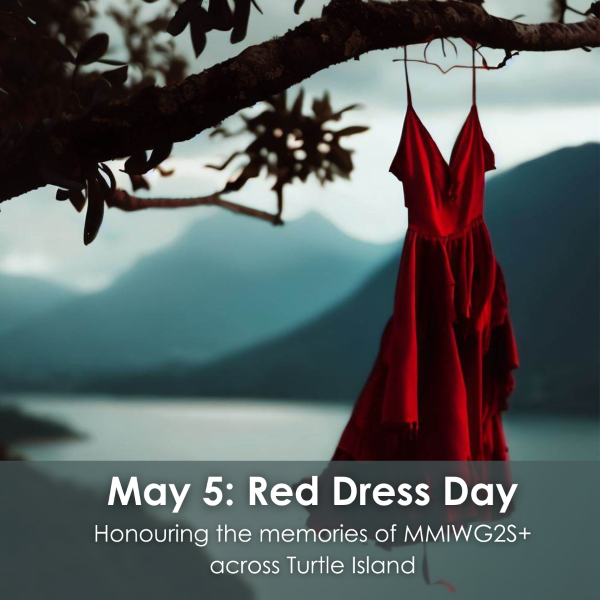
Red remains the dominant color throughout the march. In many Indigenous teachings, red is believed to be the only color spirits can see - symbolizing visibility for those whose lives were taken.
Indigenous women and girls in Canada continue to experience disproportionately high rates of violence. According to Statistics Canada and the findings of the 2019 National Inquiry into Missing and Murdered Indigenous Women and Girls, Indigenous women are overrepresented among homicide victims compared to non-Indigenous women.
The National Inquiry concluded that the crisis is rooted in systemic racism, colonial displacement, poverty, and gaps in law enforcement response.
Although a National Action Plan has been introduced, families and advocates continue to call for stronger implementation and measurable accountability.
Organizers emphasized that the march is not a media event. It is not symbolic protest for attention. It is a sacred gathering centered on families.
The 2026 march continued a tradition of intergenerational leadership, with community members, youth, elders, and Two-Spirit relatives standing together.
 Wearing a red headband, drum-keeper Shyanne Sinclair and other members of the all-women Binesi Ikwéwag Singers perform in ‘Winnipeg’
For many, speaking names aloud is an act of protection. Refusing silence is an act of resistance.
While Winnipeg hosts one of the most recognized memorial marches, similar gatherings take place across Canada and the United States, reflecting a crisis that crosses borders.
In the United States, Native women also face high rates of violence, often complicated by jurisdictional challenges between tribal, state, and federal authorities.
Advocates stress that visibility must extend beyond a single month. The work continues year-round.
More than two decades after the first march, families are still waiting for justice.
The Women’s Memorial March stands as a reminder that remembrance is not passive. It is active. It demands accountability. It demands change.
Memory is protection.
Visibility is resistance.
Stand With Indigenous Women
At Empower Native Voice, we believe awareness must translate into action and consistency.
If you choose to carry this message forward, explore our collection honoring Missing and Murdered Indigenous Women, Girls, and Two-Spirit relatives:
👉 Explore the MMIW Collection Here
MMIW Awareness